4. But Not Too Seriously: "It's No Game (Part 1)" (Scary Monsters (And Super Creeps))
Shirneto ya kage ga kakumei o miteiru
Mo tengoku no giu no kaidan wa nai
Imagine you're doing an exam, and in the final minute you're writing furiously, trying to squeeze a few marks out of a question.
As time remaining ticks down to zero, instead of a polite request to release pens or a conventional alarm tone, you hear the opening lines of "It's No Game (Part 1)", played loud.
Talk about non sequitur.
One of these days I should play the closing lines of that song.
I've cut plenty of 30-second song clips for this purpose.
It becomes a talking point while I collect the exam papers, a way to relieve the tension in the room.
Clips from interviews can work well for this too, like:
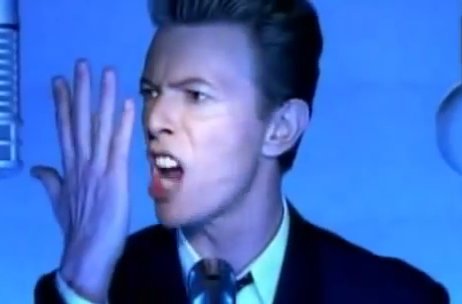
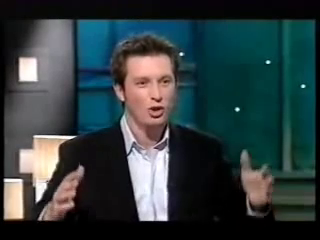
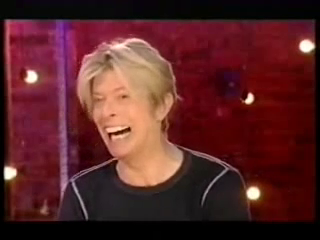
ROVE MCMANUS: I also hope in keeping with tradition you'll be the first international music artist with his own adult internet site!
DAVID BOWIE: (laughs) I think I might have been pipped to that mate. Doggy, Snoop Dogg - I think he beat me some time ago. Have you not seen his sites?
ROVE: Oh, I haven't actually, I think I'm missing out on something there.
BOWIE: Now there's an investigative piece of journalism for you Rove.
(2003 interview)
Just trying to make it fun.
The conversational approach I usually adopt risks trashing the lesson sometimes (but not too often!), but it's necessary to make students comfortable asking questions.
That's my excuse for laughing and goofing off with the students, and I'm sticking to it.
If the joke's on me, that's usually fine too.
Example: I'm often asked what I look like without my hat (when I'm not being told I look like a soldier, boy scout or French painter), and students want me to take it off.
I object, telling them that it's stapled to my head (inspired by the mouseover text on this comic**) and that taking it off would kill me.
'Shouldn't having that stapled to your head have killed you?'
'Well I don't know, but tearing the staples out sure would!'
Students have now taken to calling me Mr. Staplehead, and I think that's hilarious.
The best of their many names for me!
I could go on about the stuff I make up, but you get the idea.
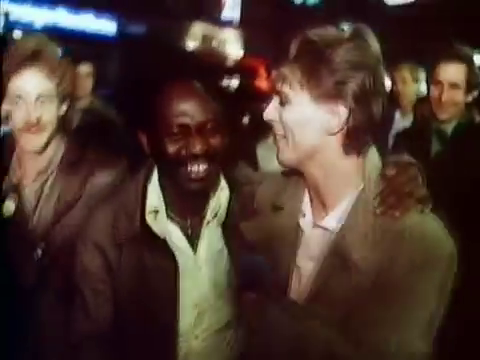
What's funniest, though, is when I tell them things about myself that are actually true, but they have trouble believing me.
Like, I've been shot in the head with a laser.
Twice.
Or that one of my friends is a drug dealer.
The poor things don't know where the truth ends and the fantasy begins.
Let me stress that I never do this at the expense of delivering the content properly.
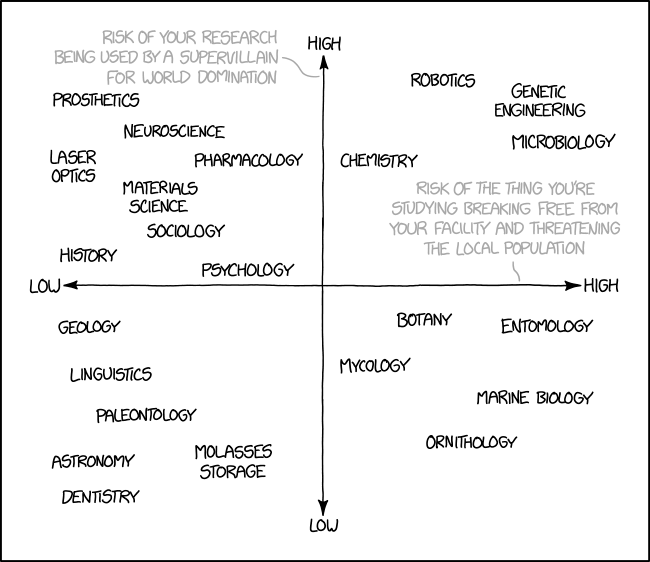
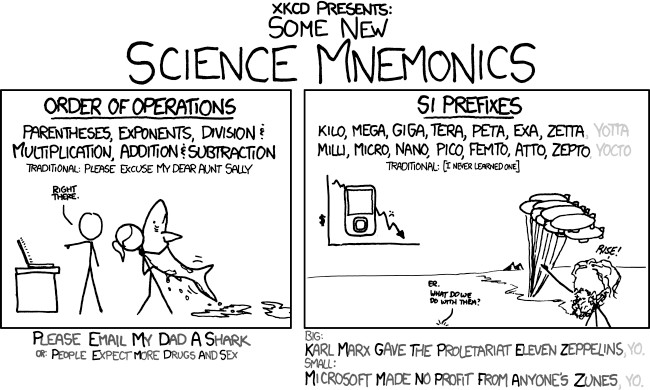
More that we try to make the content more fun, and xkcd comics are good for that:
5. Be Worth Watching: "Watch That Man" (Aladdin Sane)
Watch that man!
Oh honey watch that man!
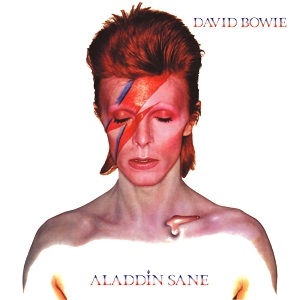
The iconic cover of the Aladdin Sane album features a lightning bolt splitting David Bowie's face.
Bowie explained this aspect of Aladdin Sane's character***:
'Here I was on this great tour circuit, not enjoying it very much.
So inevitably my writing reflected that, this kind of schizophrenia that I was going through.
Wanting to be up on stage performing my songs, but on the other hand not really wanting to be on those buses with all those strange people.
Being basically a quiet person, it was hard to come to terms.
So Aladdin Sane was split down the middle.'
Bowie speaks of being split between being this quiet person and portraying the insane lad on stage.
I can relate to this split-personality condition.
I'm usually pretty reserved, but most who know me would be surprised by the seemingly-contradictory, outgoing persona I often adopt when in front of a class.
The person I used to be, just a few short years ago, would also be surprised, but context and experience can do strange things to people.
I don't think this is unusual - many usually-quiet people have the potential to become showmen in the right setting - and teaching is one such.
Preparing well for a lesson (as I always do), and thinking through what directions the class discussion might take (or even better: having delivered the lesson before) gives one a wonderful felicity of expression and confidence that leads to showmanship at times.
Which isn't to say that I'm ever anything like actual showpeople - I've seen some of these talented people and could never be like them.
While some of the students probably think it's lame, it seems to work for some of them.
I won't say how I think I do up there, but I'll happily cherry-pick from what students have said:
'You're very funny and charming' (Does it say something that this was from a statistics class?)
'You were one of the good tutors' (This from a long time ago, on my last day at Sydney University. A really nice thing to hear.)
'Being in your class is fun. Especially when we go off-topic.'.
'Are you real?' (In response to how overdressed I am. I have a bimodal wardrobe, meaning that if I'm not dressed to kill, I'm dressed like a vagrant.)
'Where's our usual teacher? Murderer!' (They all pointed at me - and dressed from head to toe in black, I must have been guilty. They thought I was literally dressed to kill.)
'The other guy is tougher than you, but you're cooler' (When standing in at a rough school, with a difficult class. It probably didn't help that these kids thought I was a teenager, even though I was 32 at the time.)
'We're not fellas!' (I get this all the time, in response to how I usually address the students. When they complain I call them "peeps". If they complain again I call them "dudes and dudettes". I aim to please.)
'You are awesome!' (Either I was actually awesome or he thought I'd been generous when marking his work.)
'I heard that you're good' (The only sensible response to this is that I'm actually awful.)
Be worth watching, and the students won't want to be distracted by their phones or their mates.
On that note, back to Aladdin Sane.
It starts with "Watch That Man", one of the absolute stonkers (in the words of one fan) Bowie had a knack of opening albums with.
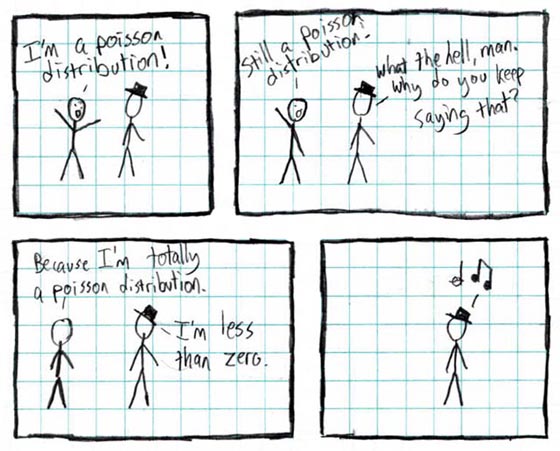
I like to put this song on for a statistics class when discussing Z-scores and the normal distribution.
Inspired by a lecturer at UTS (from when I worked there), I tell them about this article at statslife and how stats allows us to compare achievements across various pursuits (we can compare cricketers with footballers with golfers etc.). A neat trick, don't you think?
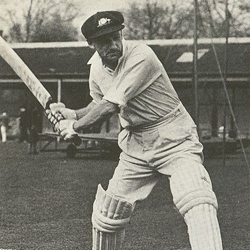
Don Bradman comes out on top, and we calculate that with his Z-score he was literally a one-in-a-million.
A man worth watching indeed.
Cricket provides some nice material for statistics lessons.
At SCU Sydney there are a lot of South Asian students and cricket means something to them.
And xkcd as always:
6. Finish In Style: " "Heroes" " ("Heroes")
Is there a Bowie list that this epic doesn't make?
Well I can think of a few, but this isn't one of them.
When I was a student of Physics, a lecturer, one Geraint Lewis****, would put some lyrics at the ends of the exam papers he wrote, that would include a fitting line like 'This is the end' from The Doors' "The End" or similar.
So when I set a Physics exam of my own, I put this at the end of it:
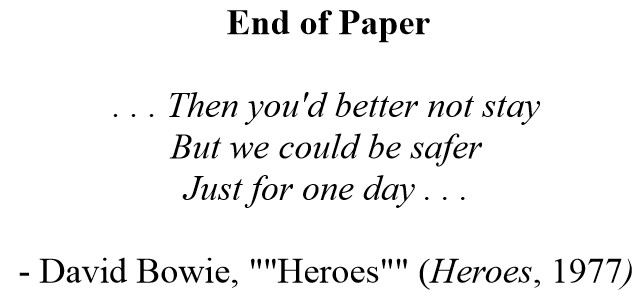
. . . ending like the song, to imply that the exam was as epic as the song (I wish). From the closing verse of the album version, not the single version (which is only half the song).
The other noteworthy thing about that exam is its last question.
This might be the sort of thing that only students/ex-students of the hard sciences can appreciate, but I liked interesting questions, that had something of an artistry about them.
Not necessarily difficult.
Some of these were "crossover questions", requiring knowledge in more than just one of the examinable topics.
I won't get into too many details, but I crafted a question that covered both waves and mechanics, that was inspired by this xkcd-what if? article.
The mechanics is obvious, but there are also waves in that flagpole!

Let's hope that the students (one of whom got full marks for the question) learned something for such a predicament:
Imagine you are falling down the side of a skyscraper.
Below you, you see a horizontal flagpole that, with your downward trajectory, you will be able to reach, but only with your arms stretched to their maximum extent.
Assuming you are able to hold on to the flagpole, explain why it is preferable to "swing" in circular motion rather than to "brake" linearly.
(skip numerical details)
Assume that your arms are massless . . . If your arms can sustain 10 kN . . . from what maximum height above (and relative to) the flagpole can you fall and still hold on to the flagpole?
It's good that I didn't have to ask the question verbally, because I'm not sure I would have been able to keep a straight face otherwise.
7. Thanks For The Memories: "Slip Away" (Heathen)
The Uncle Floyd Show was a children's show with low-brow humour that also aimed to crack up the kids' parents.
From Deep In The Heart of Jersey!
Introduced to it by John Lennon, David Bowie was a fan, saying 'We used to love falling around watching this guy . . . The show looked like it was done out of his living room in New Jersey.'
That quote and more about Bowie's interest in Uncle Floyd can be found in this excellent piece by Chris O'Leary.
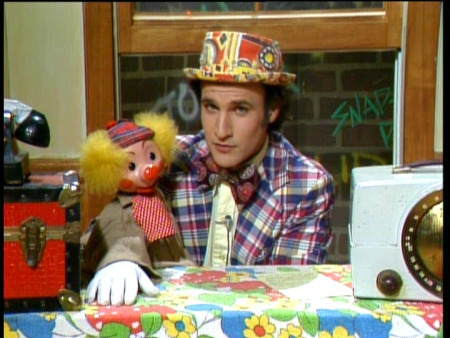
I've never seen an episode (they're hard to find; the quotes in the rest of this paragraph are from O'Leary's piece), but it sounds like a riot - Uncle Floyd infuriating his guests (some of whom were eccentrics he found on the side of the road), 'a frustrated host constantly being interrupted by an endless parade of pests', risky humour pitched at a stoned 1 AM audience.
'Television was a world made from collisions of random elements, held together by a man in a plaid coat.'
And puppets, including "Bones Boy" and "Oogie".
Uncle Floyd's low-brow humour, low-budget production, anything-goes approach and weirdness apparently led to this:
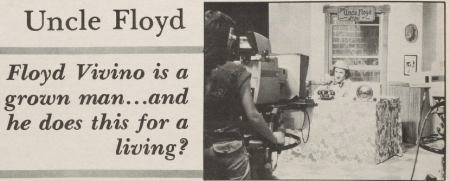
I sometimes feel like a pic of me at one of the more unconventional moments of my lessons could be stuck in there, with the text adjusted to suit (including my stage name, D.J. Staplehead).
Putting songs on for classes, showing them comics, making stuff up - I do this for a living?
Accordingly, teaching rarely feels like work to me (but marking, on the other hand . . .).
As far as being unconventional goes, my act is a little like Uncle Floyd's.
"Off the path", he would say.
And Bowie also saw a little of himself (and perhaps what he might have become) in Uncle Floyd, writing a song about Uncle Floyd to frame an album about a time (the '60s) when he was trying to crack the big league, as '80s Uncle Floyd tried to do.
The song, from one artist to another, was one of the finest of his '00s, "Slip Away".
In live performance he would show a bit of Uncle Floyd (clearer in this recording, and its audio portion is heard at the beginning of the prototypical "Uncle Floyd" (Toy)).
Like I said, I've never seen an Uncle Floyd episode, but even without that context, this great song is clearly one for the times that have "slipped away", for all that 'nearly might have been', and that we wish we could revisit, relive and preserve.
I like to put this song on for a class at the end, in the final lesson - when it's a class that I know I'll miss.
Maybe they'll remember that guy who knew how to keep his head warm in style.
Maybe they'll remember the teacher who was a little different, who tried to make it fun.
If I've managed to provide some entertainment, I guess my work here is done.
Sailing over Coney Island
Twinkle twinkle Uncle Floyd
We were dumb but you were fun, boy
How I wonder where you are
I am a D.J., and I've got believers.
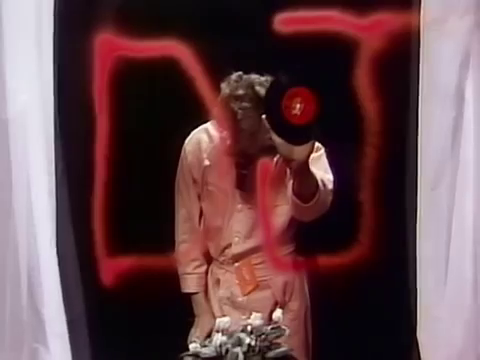
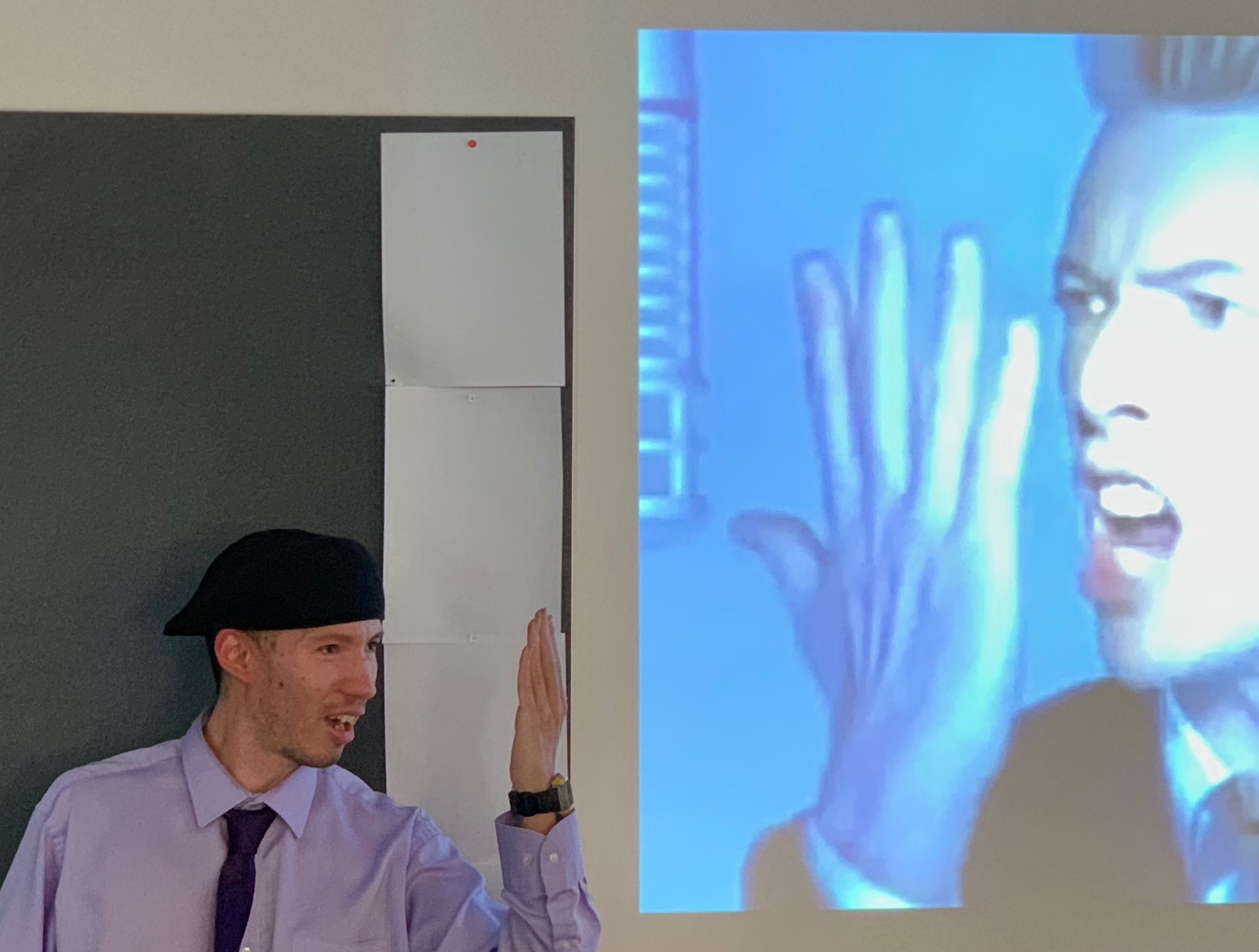
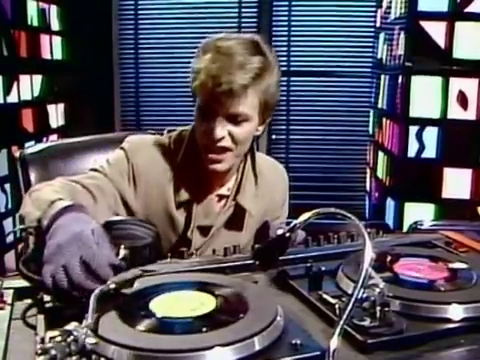
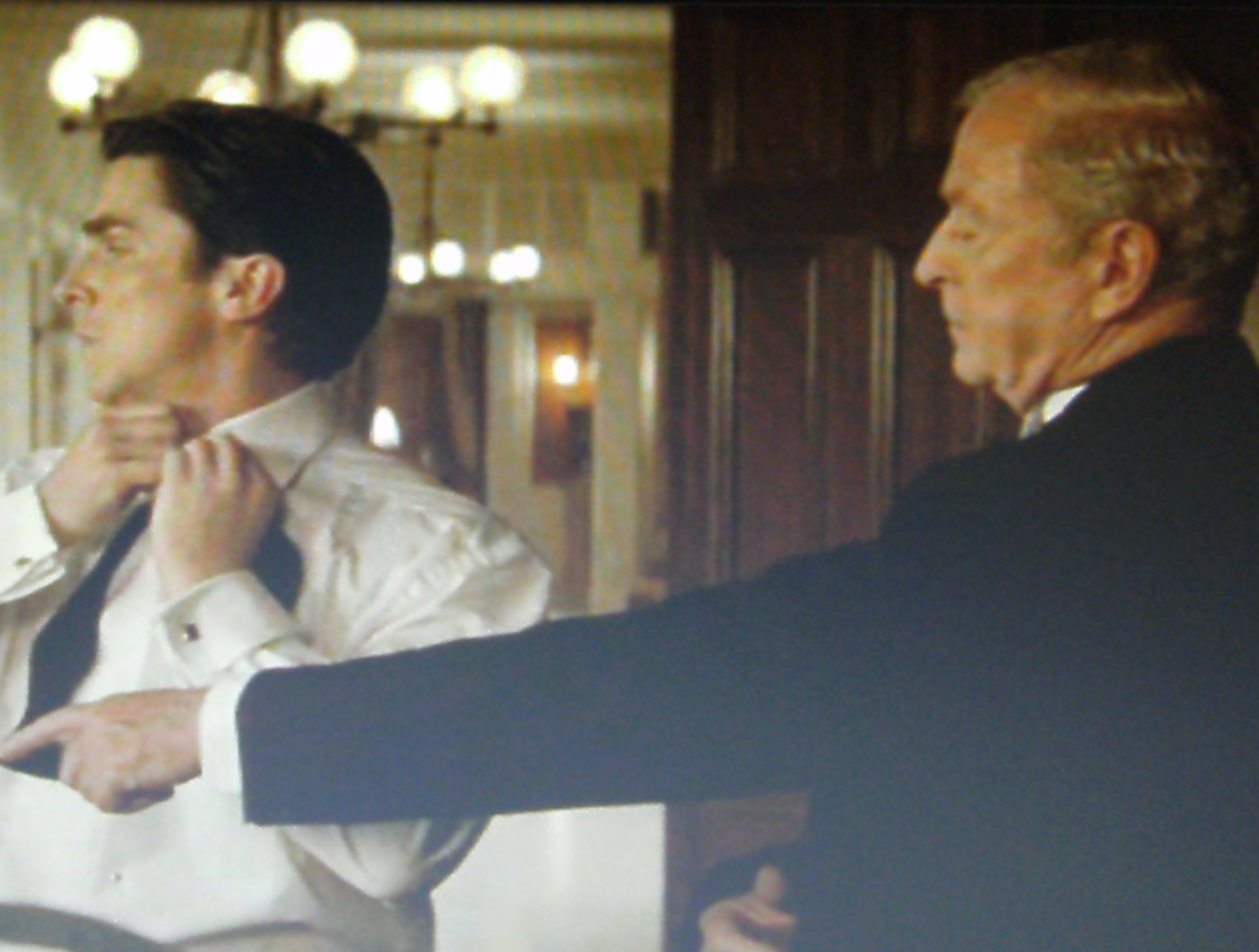
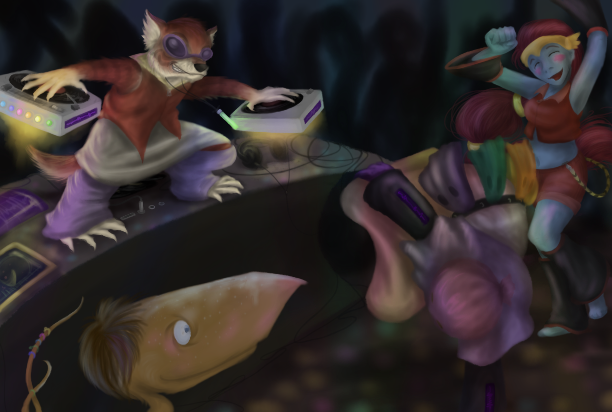
Illustrations: Me mirroring Bowie in the "Jump They Say" music video, photo by Fanglong (Kyle) Luo of SCU Sydney; still from the "D.J." music video; a scene from Batman Begins; fan-made image (by "Zarla") from the Star Control community; still from the "Jump They Say" music video; this xkcd comic; Anne Frank alongside a still from the "Love Is Lost" (Hello Steve Reich mix) music video; stills from Bowie's appearance on Rove Live in 2003; still from the "D.J." music video; this xkcd comic; cover art for Aladdin Sane; Don Bradman; this xkcd comic; the end of a Physics exam I wrote; image from this xkcd-what if? article; Uncle Floyd image from Chris O'Leary's "Uncle Floyd"/"Slip Away" piece; what looks like a newspaper cutting about Uncle Floyd, from Chris O'Leary's piece; still from the "D.J." music video.
**For the second post in a row, I've not had the courage to show this comic here.
***As quoted in the Aladdin Sane section of Nicholas Pegg's The Complete David Bowie.
****I contacted him recently, and like how he tweeted about it.
Earlier (2015-2017)
Later (2019: Buddha Of Suburbia)