2020: Cat People
1. Cat People 2. The Sewers 3. No One Calls 4. Slow Burn 5. Something In The Air 6. New Angels Of Promise 7. The Fear of Losing You 1. Cat People See these eyes so green I can stare for a thousand years Just be still with me You wouldn't believe what I've been through - "Cat People (Putting Out Fire)" (angry Let's Dance version) 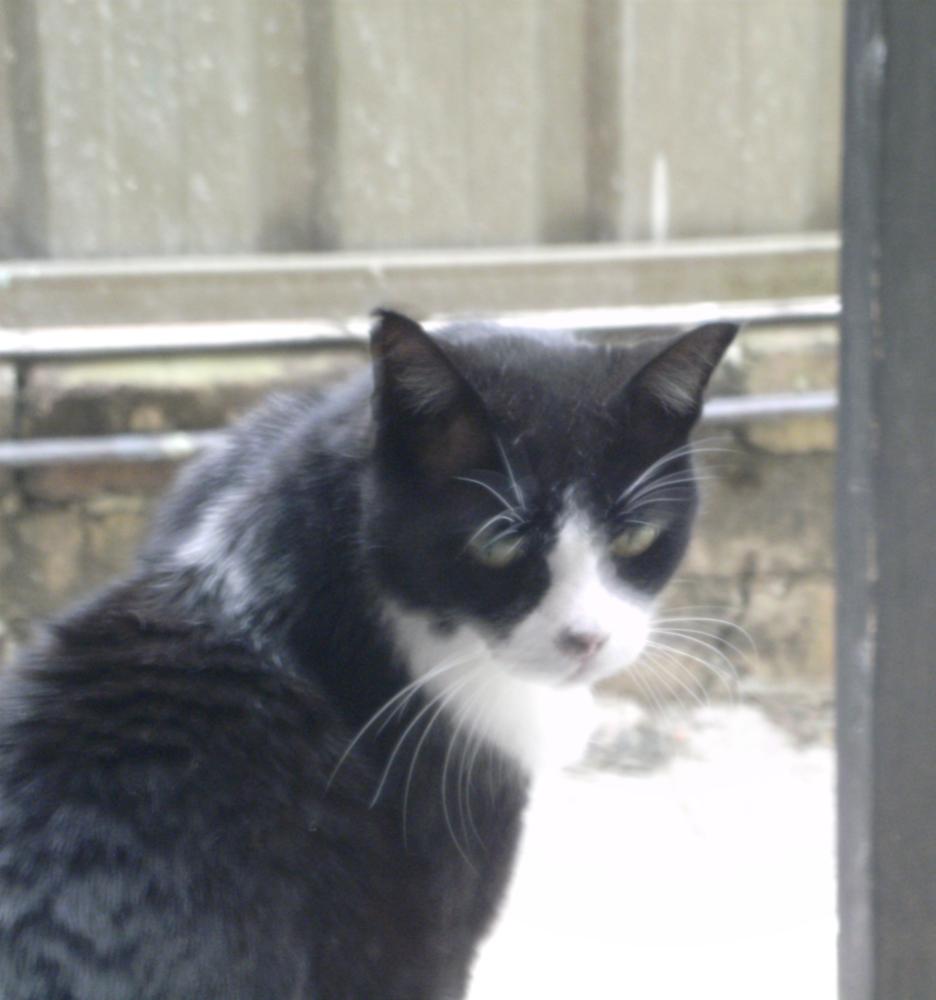
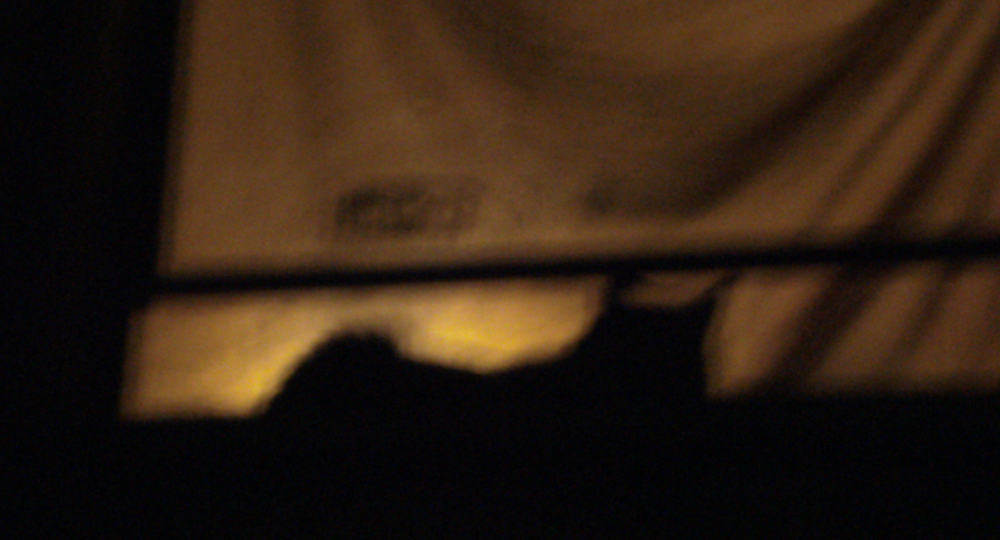
One of the many little stories about this house, untold in my last post, is about its cats. As I was saying, there are old-timers upstairs who seem rusted to the place, but they aren't the ones who have been here longest. We have two cats, and at this point they have both lived here longer than any of the humans. One of them belonged to a lady who passed away, and has hung around ever since. The other belonged to a guy who had, by the time he left, been here for almost fifteen years. He would have liked to take his cat with him, but his new place had a dog that he thought would be a problem for the cat. So we have these two cats who wander around the house, coming and going between various rooms, meowing, taking food from this human or that, sunning themselves and so forth. I didn't take any interest in the cats until needing an image of a cat for this post, and then they wouldn't cooperate. They wouldn't react if I just walked past them, but if I stopped nearby (like to take a photo), they'd leave. They didn't trust me. I knew it was possible to gain their trust, because the upstairs people had it, and one of the downstairs people had as well, before she left. One of the girls (the loud one) spent some time on the project, at one point getting a plate broken after leaving it out with food for one of the cats. The efforts eventually worked, and that particular cat would frequent the girl's room. Once, it got its paw stuck in the fly screen on the window, trying to get in, and I freed it. But this favour wasn't enough to gain its trust. The shot I was looking for was one of a cat's eyes at night, which could be quite striking and I assume are partly what led to some of the lines in "Cat People". One night after failing to get this shot before one of the cats ran off, I noticed that it had gone upstairs and was lying in a window, possibly watching me, but I couldn't tell from its silhouette. More focus would have been better, but that image - of being an island, and barely visible - turned out to be the right one for this piece.
2. The Sewers "The Demons from Adrian's Pen" (Doom soundtrack) 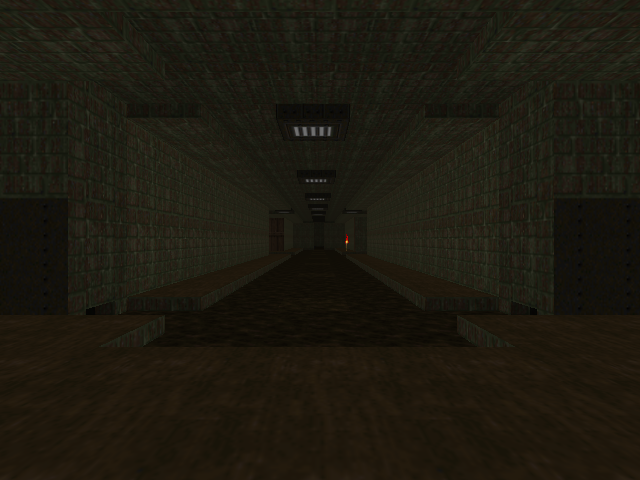
At the end of Final Doom: The Plutonia Experiment are the toughest maps of the original classic Doom anthology. Map 28 (of 32) is "The Sewers", containing tunnels with flowing sewerage and only a single glimpse of daylight. It's followed by "Odyssey of Noises", the most convincing attempt at a cityscape in classic Doom, expansive and bright. Maybe the consecutive placement of these maps was supposed to illustrate the player character infiltrating the infested city by going through the sewers beneath it. They also seemed, to me, to illustrate an emergence from darkness to light. Years ago, when I was looking for work and not finding any, I felt like I was in The Sewers, waiting to emerge into a city. And even after I had found work - unstable work - I arguably remained in The Sewers. What I mean is that although for most of this time I was physically in a city, I was not properly part of it. It's a bit like there's a house party going on, but you're stuck in your room working on some stupid project, unable to join. Physically in the house, but not participating. You can hear snatches of the music, glimpses of the light. 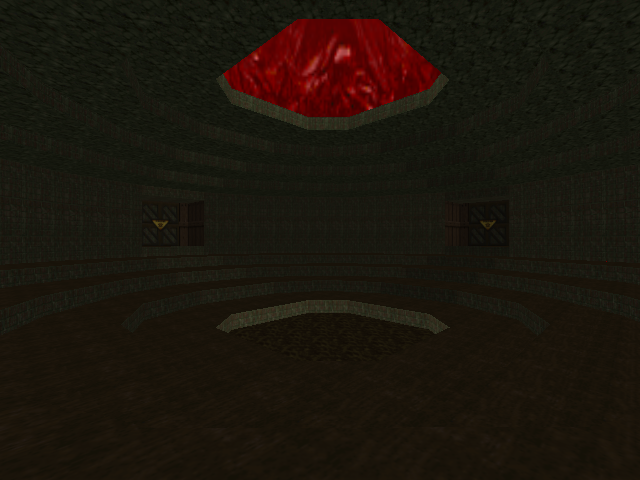
Being poor is one thing, but uncertainty was the greater problem, at least for me.
These were years moving from place to place and job to job, with fluctuating prospects and no real certainty of anything.
I'm not portraying these as terrible years, because they really weren't.
In some ways they were great years in which I worked out a lot, including some conventional stuff (I'd tell people I was getting my shit together, and I actually meant that in some of the same ways that normal people mean it), and super-secret stuff.
It's more that in these years was a series of real-life challenges.
Perhaps these are just characteristic of an unstable early career and not unusual, but they are reason enough for people to do their best to escape and/or stay well clear of The Sewers.
Being in The Sewers is isolating.
At times, there's this problem or that to deal with, that stops you from keeping up with people.
And while these problems can be interesting, you'd be brave to talk about them openly.
People deal with this in different ways, but my problems are my problems.
You might want to reach out to hiring managers. Doing a research degree showed me that research has been turned into just another process that isn't so different from most other jobs in the way that people would think it should be. And which it should be, but that's a whole other discussion. So when I finished a research degree, I said I'd be fine with anything really. Like, someone could have hired me to work in a factory and that would have been fine. Anyone who knows me, knows I'm not very ambitious, and I find most things interesting. Answering phones, administering schedules, maintaining facilities and so forth - I would have been happy to do any of these things, while pursuing other more interesting projects with the rest of my time. I totally meant it, and applied for many of these sorts of jobs - hundreds of them. But having a higher degree is a severe handicap when looking for "plain" work. The circumstance is common enough that I'm surprised I didn't hear about it before, but being overqualified was a routine reason I was given for not being successful after interviewing. They'd either use that word, or say something like they thought I was definitely more than capable, as if that was a good reason to not hire someone. Sometimes I would be told during the interview as well, one interviewer went ahead and suggested that I was "too smart", and the discussion turned to what other things she could see me doing. Of course, it usually didn't get to the interview stage.
Usually they just saw what was on my CV and dismissed it.
No One Calls.
A perverse situation - as though, if I chose not to do the type of work the labour market thought I should do, I was locked out of the workforce, and consigned to The Sewers.
This is one of the things that the people who designed the labour market / social security / welfare / whatever-we-call-it safety net don't understand, at least in this country. Or maybe this circumstance has only materialised in the past decade or so. Help from above isn't forthcoming. Whatever the reason, it's clear that rather than helping people into work, our system makes being unemployed a purgatorial state in order to motivate people to get themselves out of it, while making it more difficult for them to do so. Punish people for being unemployed, and they'll pull themselves out of it. Falling won't kill you, but don't expect a soft landing.
Our system works by giving people incentives, so from that perspective it's consistent. But our safety net burdens people with futile, retarded obligations that make it less likely they will be able to join the workforce. By making reliance on the safety net a true last resort, anyone sane would prefer to do pretty much any job, even if it's stressful and worthless in the sense that no-one should have to do it (no benefit to society), and no-one would choose to if they had a choice. I know, because I had to make that choice. I won't get into too many details about what I was doing. It wasn't really a secret while I was doing it - there are people who knew, it just wasn't something I was keen on sharing, and it was the least interesting thing on my mind anyway. In a way, getting the work was a success because I'd "beaten" the "overqualified" tag, but needing to be good little drone also has its disadvantages. One is overbearing superiors who pile pressure on to maximise productivity. It was a pointless sales job in a call centre. One day I heard our team leader speaking to the guy next to me, who was apparently not hitting our sales target. 'Anthony's calling the same lists as you and he is smashing it. Have you heard what he's been saying?' Team leader knew I could hear him, and maybe he thought it was some kind of compliment, but I just wanted to deck him. He was making me feel bad about doing well, because my performance was being used to berate someone who was just encountering some bad luck. At the end of the shift I caught up with my colleague, who said that the pressure was too much and he would be going home early that day. He was back the next day, but I quit the job later that week. It wasn't what I'd signed up for. I'd jumped without having anything to jump to, but managed to find something else soon enough.
A job like that is a Slow Burn, and that particular one shouldn't have existed because we weren't selling anything worthwhile.
I hope my colleague there found a way out, because when working a job like that, you might be employed but you're still in The Sewers.
'Leading us on and on and on'.
5. Something In The Air We lay in each other's arms But the room is just an empty space I guess we've lived it out Something in the air - "Something In The Air" ('hours . . .') In The Sewers, there's a good chance you'll be staying in shared accommodation. As I've said, this can be great, you meet interesting people who become friends, some of whom might become more. But you'll also meet people who, even if they're not themselves unsavoury, are up to something fishy. I once rented a room from a young couple, we had some good times. I had no idea they were doing drugs until the boyfriend overdosed one afternoon. That simplifies what happened, but is essentially right - he'd reacted unfavourably to a substance that wasn't meant for him. His partner and I worked on him until the ambulance arrived, and then we watched as they attempted unsuccessfully to bring him back. He had sold the room to me, and I'd always thought of the house as his - but technically it was his partner's name on the lease. After he passed away, there was kind of a limbo during which I paid rent to her, while she no longer lived at the house, instead staying with her parents. She would come around to stay for a night now and again, but eventually realised that even though she wanted to live there, she couldn't. It was her partner's presence that she could feel in the rooms of the house - for her, there was definitely Something In The Air, and she couldn't handle it. She was renting the house from the owner, and sub-letting a room to me.
After months of not filling any of the empty rooms with tenants, she said she couldn't afford it any longer, and wanted me to either take over the lease or leave as she gave the house back to the owner.
But in my lease with her, I still had months to go, and she was obligated to maintain my room's availability.
Making her stay in a place that depressed her and was sending her broke wasn't something I could do.
Then again, I was at an important stage of a teaching degree I was doing (at more than a full-time load) and didn't have time either to move or find tenants to fill the rooms and affordably take over the lease.
The only sensible move was to insist on the terms of our agreement and make her stay.
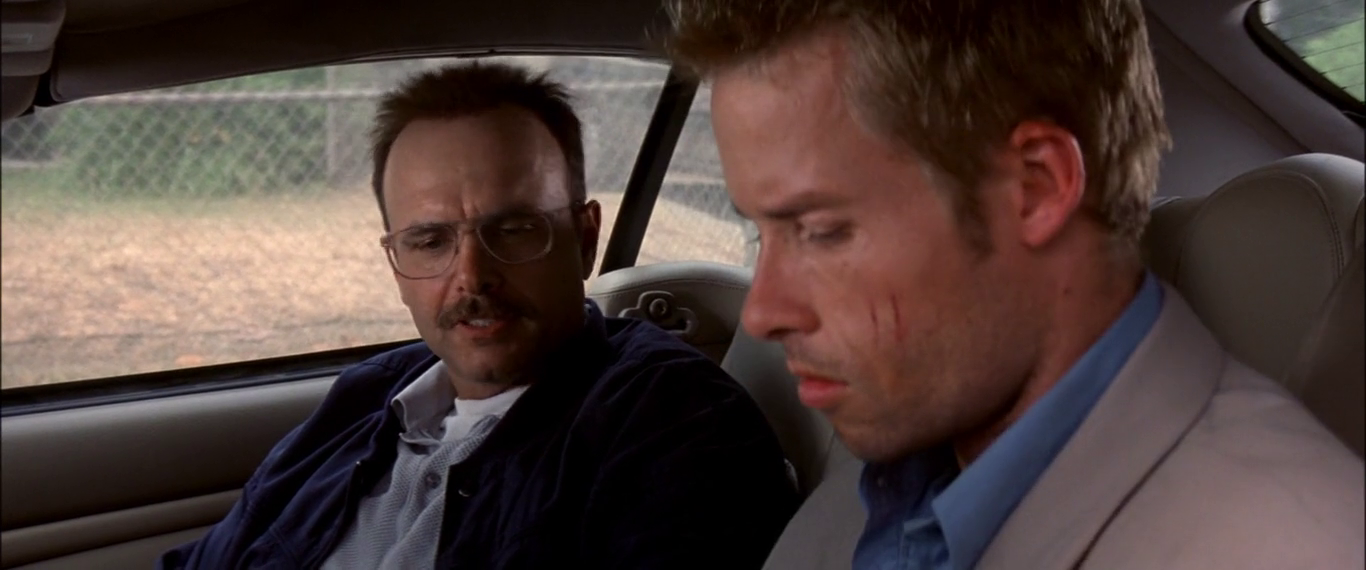
TEDDY: You're still here because of Natalie. LEONARD: Who's Natalie? TEDDY: Schmuck! Whose house do you think you just walked out of? . . . Oh that's right, take a look at your pictures. I bet ya got one of her. But I would always be fool enough to play nice. So I took over the lease, and over the following months tried to fill the rooms. This was anything but straightforward. While doing the work required for my degree, I showed many potential tenants around, and getting any to stay was difficult. During this time I was paying rent on a whole house without having planned to, and watched nervously as my bank account went into near-freefall. Dealing with tenants, when I eventually found them, was also a pain. People can be so disappointing. I eventually got my degree and filled the rooms.
Having to do these simultaneously was crazy, in some weeks I hardly slept.
But when you're in The Sewers, and your existence sits atop a foundation of shifting sands, this kind of instability is what you have to deal with, and the only way out is through . . . unless, perhaps, you're horrid to someone**.
From The Sewers, you'll want any way out that you can find, any Angels Of Promise.
On any job offers that come your way, you might read all the terms, but it isn't because there's any real chance that you'll turn the offer down - that luxury isn't yours.
And if you research the history of any place you might work for, it's more about helping you get the job than background to help decide whether to work there.
All the power is on the other side of the table.
Asking questions at an interview is probably advisable as always, but don't make them difficult questions.
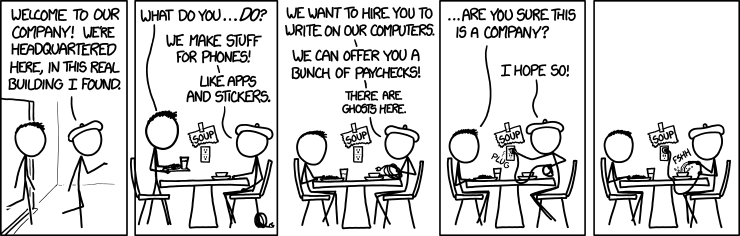
Many paths out of The Sewers involve stints at startups ("new" angels of promise). After my teaching degree I spent some time at a small private school with a total enrolment of something like 30. In some ways, working there was great - compliant students, small classes and time to focus on quality teaching - at least, at face value. But in other ways it was awful - because of the challenges that I suppose many startups face. Not having been around for long, startups don't have well-established procedures.
As a teacher of science, I worked in a lab that had been rearranged by my predecessor to suit himself, but nothing had been documented.
There was no list of equipment, and I spent hours trying to find items, in some cases only to find that they weren't there.
Not maintaining records properly might have been fine when the science department was just one person, but with that one person replaced and not even contactable (in this case they'd been deported), we were left to figure out what was what.
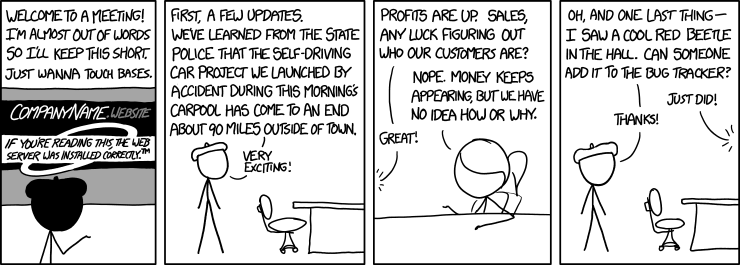
Startups can also be challenged by high staff turnover. At a school, students form expectations of teachers based on what they have seen before. If that school is a startup with high staff turnover, those expectations might be defied, and defying them, even in what would ordinarily be a good way, can be disastrous, for a certain type of student body. And when there aren't that many customers, even a small number of complaints is a big deal, meaning that after a few complaints, the staff are walking on eggshells. Startups can also be especially challenged by the burden of compliance with regulations, because this burden falls upon a smaller administrative group, and is supported by a thinner layer of procedures.
At one point I was told that we would be lying to inspectors from the regulatory authority.
It wasn't clear whether I would have to go along with it, so I didn't have to say whether I would.
And I wasn't around when the inspection happened, so it didn't involve me.
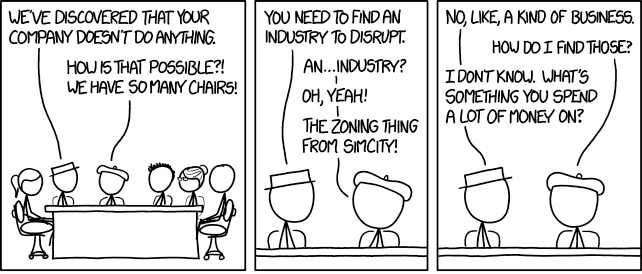
Then there's the management - they might not know what they're doing. This can mean unrealistic expectations of employees, with various consequences (often unpleasant at best, disastrous at worst). One of these that I experienced was that even though I was new, I was expected to do the job of an experienced hire. But what I was asked to do would have been a challenge for an experienced hire, who wouldn't have put up with the shite that was dropped in my lap. I, unfortunately, being new, didn't know this (I later worked at a government department school and saw how things were supposed to be done). Being new can lead to being taken advantage of. So, while only being paid for contact teaching hours (not lesson prep and marking), I also had to write assessments, prepare lab exercises (with the dysfunctional lab mentioned above) and administer lab assessments for senior science classes.
What made putting in the necessary extra hours especially difficult, in my case, was that I had a two-hour commute and was working another job (ordinarily not the company's problems, except when they want you to work extra unpaid hours).
Moreover, some of this really was made impossible by the lab being in use by a tutoring business run by the same management, so there were times when I couldn't even get in to do some of this stuff.
They were managing HR, and their other resources for that matter, on the cheap, though I'm not sure they knew quite how poor all of this was.
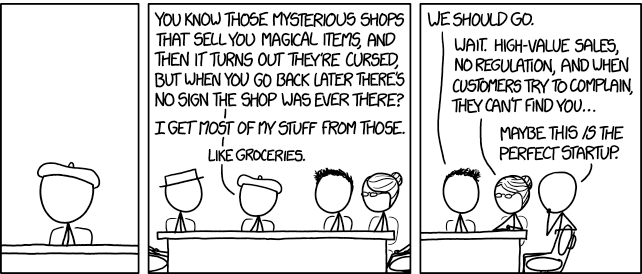
With all of these challenges, it's unsurprising that startups can be paranoid and control information carefully. I didn't know until later, but they lied to me. I asked a direct question about some gas taps in the lab. We weren't using them, and I was told that they were left over from a previous school. I asked what had happened to this school, and my interlocutor said he didn't know. He was lying - he must have known that this previous school, with some of the same personnel in management, was a failed precursor to ours - which also failed later that year. If I'd done some homework on the place, I might have discovered this, seen the signs for what they were - indications of a failing startup. But would it have made a difference? When attempting to escape from The Sewers, you have no power, you don't really get to choose who you work with. It's easy to make jokes about this sort of thing, except when it happens and you have to work with it. Of course, not all startups are like this!
I currently work at one where the experience is far more positive.
They can be fantastic opportunities, but always carry some risk.

I could go on, but I'd say that's enough about me failing. Keep fighting, try not to screw anyone over, and don't expect too much from the system. Be pragmatic, but character still matters - so put up with people sucking, up to a point, but make a stand when you have to. So I can't say I learned anything we haven't heard before, and those things aren't particular to The Sewers. But there is something different about climbing in the dark, and knowing that if you fall, no-one will catch you. That fear is something you can learn from.
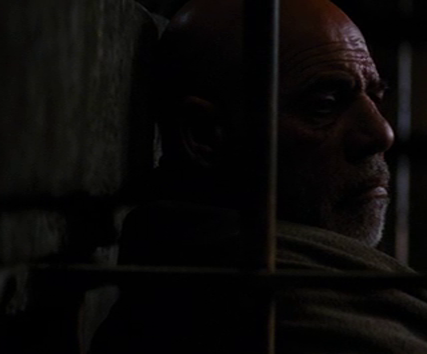
BRUCE WAYNE: Why? PRISONER: How can you move faster than possible? Fight longer than possible? Without the most powerful impulse of the spirit. The fear of death. WAYNE: I do fear death. I fear dying in here . . . PRISONER: Then make the climb. On average, these things happened about five years ago. People knew bits and pieces, but I don't think anyone has heard it all before now (not that this is all). The first reason for not mentioning it before is that until beating all this, that would be unforgivable weakness, of course. And then, it wasn't clear when I had beaten it, because there wasn't really any discrete step out of The Sewers. I guess it was a few years ago, but I can't say exactly when. 
This year I've experienced setbacks resulting from the pandemic, and there have been things I couldn't do, like chasing tail and making a fool of myself on stage. But interesting (good) stuff still happened, and nothing in my way now is comparable to what happened in The Sewers. In this most disruptive of years, I haven't needed to worry. Except worry for other people. But if I can find a way out of my little hole, the rest of us can probably find a way out of our big one - with a lot of vaccine, and maybe some gasoline. 
Emerge into the light, ready to make your comeback, have your vengeance, rise from the ashes . . . insert your cliche here . . .
. . . maybe after enjoying a moment in the sun. 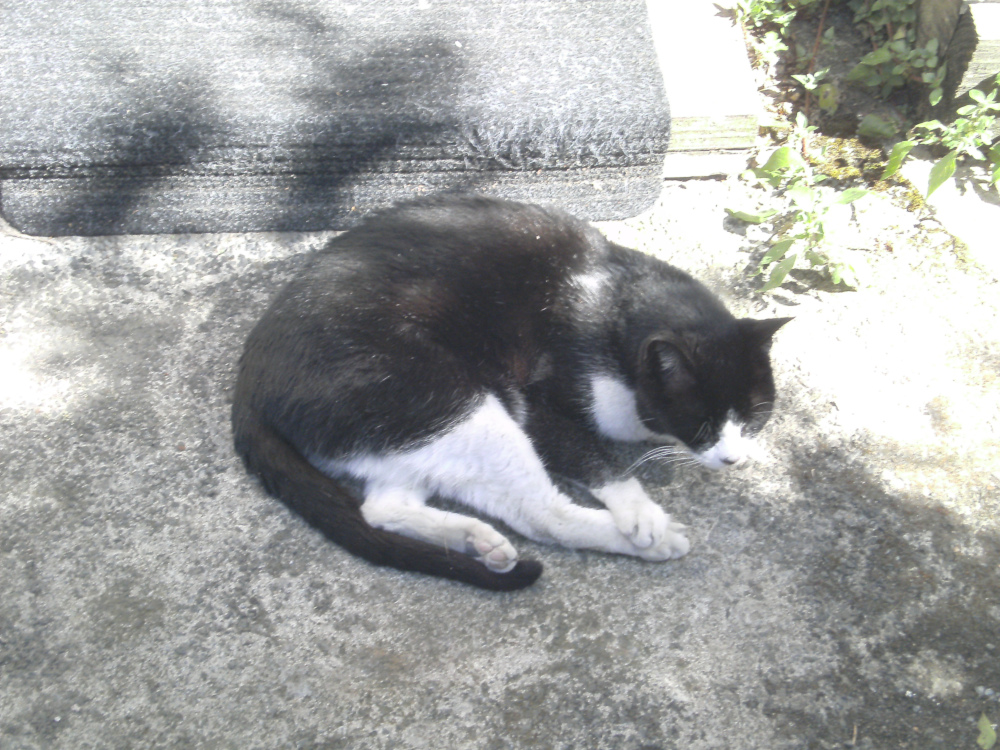
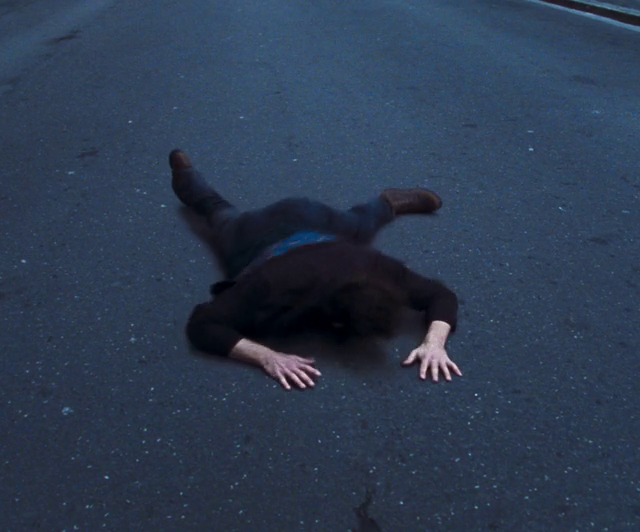
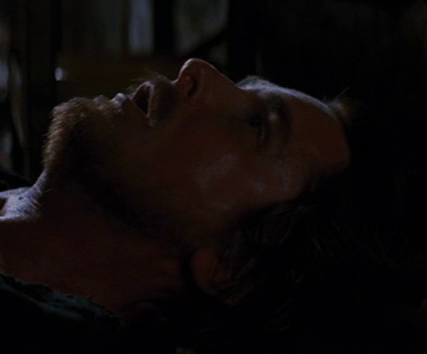
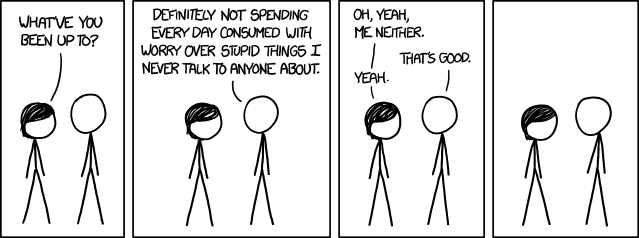
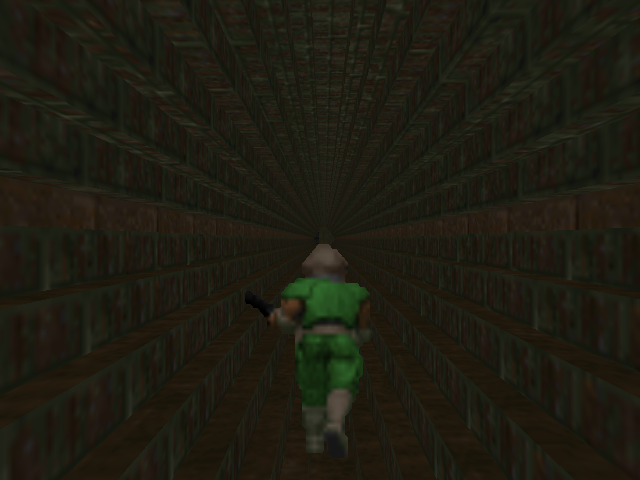
Illustrations: cat in a window at our place; cat wondering what I'm up to; cat in a window at our place; stills from "The Sewers" (Final Doom: The Plutonia Experiment), rendered with GZDoom; xkcd: "Pastime"; stills from The Matrix; still from "The Sewers"; still from Memento; xkcd: "Job Interview"; xkcd: "Meeting"; xkcd: "Startup Opportunity"; stills from Inglourious Basterds and The Dark Knight Rises; cat lazing outside (this one's name is Putput). **I met the girl again, years later, and she seemed okay. She had plans. Earlier (2019: Buddha Of Suburbia) Later (2021: Sunday) |