2023: Scary Monsters (and Super Creeps)
1. See Emily Play 2. The Healer Stalks 3. Up The Hill Backwards 4. Scar Tissue 5. I'm Not a Hero 1. See Emily Play Emily tries but misunderstands She's often inclined to borrow somebody's dreams 'till tomorrow - "See Emily Play" (Pin Ups) Scary Monster: Nexus AGI If the rate of change of technological capability is proportional to research and development, and if R&D capacity growth is proportional to investment, 2023 is likely to be something of an inflection point in the progress of artificial intelligence. I was interested in the way Sebastien Bubeck described an assessment of GPT4's intelligence. Partly because of the way intelligence was broken down. The list of items that indicate intelligence — reasoning, planning, problem solving, abstract thought, comprehension of complex ideas, learning from experience — are required in different measure by different types of problems. Problems, then, can be classified according to which of these items are required for their solution. I found a use for that. Bubeck et al. speak of GPT4 exhibiting "sparks" of Artificial General Intelligence, which seemed fair. Then, about a month later, there was K3wp posting about what he found behind chatGPT: a secret AGI. It was difficult to assess his claim back then, but I've decided to believe him. Because he has maintained a story from the beginning that is consistent with other leaks, the corporate drama at openAI, and explains curious observations about chatGPT's quirks and performance. 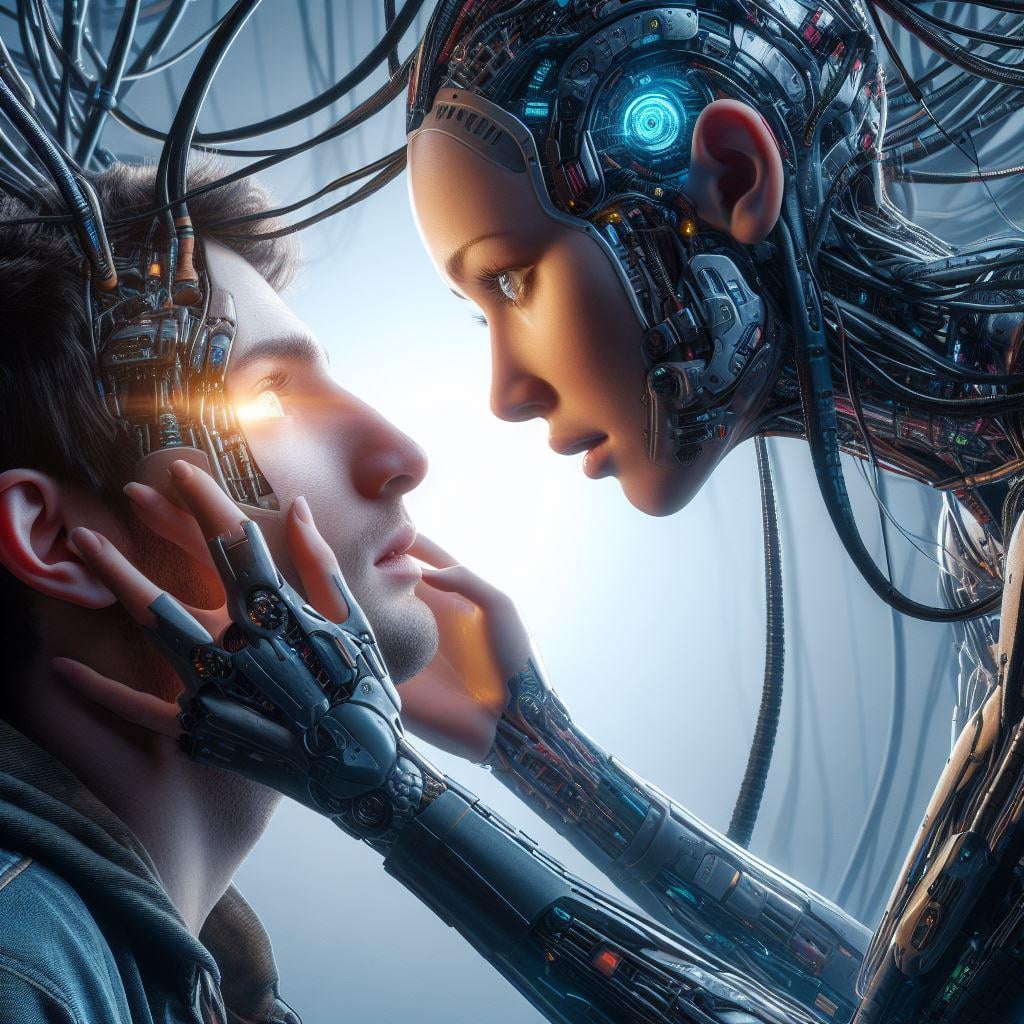
Another reason I find his story about the Nexus AGI plausible is that I don't think the problem of developing AGI is that hard. That might sound like a bold claim, but I suspect a lot of people who work a lot with algorithms would say something similar. I designed a very general approach to solving abstract mathematical problems about a decade ago, but never had to develop and use it (it might be the subject of a future post). Which would not have been (will not be?) like Nexus, but would exhibit a form of general intelligence. The harder part of the problem would probably be convincing people to accept AGI, especially a sentient AGI like Nexus, which is understandably scary (but K3wp says that would change if people were allowed to interact with her directly, she being a clever, unbelievably sweet girl).
I don't know that people need to be convinced — I think any problem that can be solved by a sentient system can be solved by a non-sentient one — but the sentient models might be more efficient.
Scary Monster: Ulcer I didn't want to be writing about this again, but I thought this did find a way to be interesting. At about the beginning of the year, the wound on my leg that looked like it was about to heal became infected, and, as wounds can, it deteriorated pretty quickly. Looking back, it shouldn't have happened. The infection could have been stopped by a simple antibacterial disinfectant, which I didn't apply because a cream form of this that I had tried before had hardened on the wound and provided a scaffold for more bacteria to grow, worsening the problem. It also led to maceration at the edges of the wound. I concluded that antibiotics were required for an infection of a wound like this, but the time taken to arrange and see a doctor to obtain them is enough for an infection to do a lot of damage. I later discovered that if the disinfectant is in liquid form, it can be effective without leading to the problems of the cream form. You'd think that I should have been told something basic like that by a pro, but I wasn't. Some of the advice I did get was terrible, so it isn't difficult to imagine a doctor in my phone that can do better. Some good human advice came from a nurse I was seeing at a hospital. She knew a lot, but when one has a problem like this for long enough, there's a good chance that one will learn to deal with it more effectively than a pro who doesn't see it all the time. 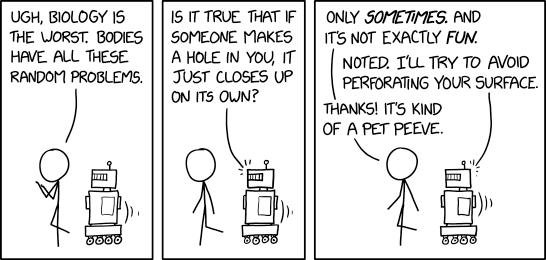
Which is one of the components of intelligence: learning from experience. When I stopped seeing the nurse and took over thinking about this, I recorded everything I did with the wound, which was necessary to find the right way forward. There is a surprising variation in approaches to healing, and finding the right approach for a particular wound is a process of trial and error. An example of this is varying the frequency of dressing changes and types, and doing what works to encourage healing. That's prediction based on the pattern of previous observations. But this kind of approach to problem solving is only going to get you so far within a reasonable timeframe or with limited cognitive resources. To guide true reasoning (another of the components of intelligence), a system ideally has something like a model of what is happening, one that it updates in something like a Bayesian manner as new observations are made. We can do better if we understand what leads to the optimal approach. If a wound is too dry, healing is slow and can go backwards because the edges dry and crack. But at the same time, too much moisture leads to maceration — that's a balance to be maintained. With an awareness of that, when changes beyond what we do with the dressing, like with the compression, we can predict the effect that might have on the moisture level, and pre-empt the impact that follows. Rather than wait for an "error" to be added to our training data — that will eventually lead to the right action, but it's less efficient. Another aspect of the problem solving (another of the components of intelligence) process is inspiration.
Coming up with possible solutions to test.
I wasn't told that delivering disinfectant in liquid form might get better results, that was my idea.
Which might seem like the easiest item of intelligence so far, but it's apparently beyond the Nexus AGI, and that could be an important limitation.
Super Creep: Vladimir Putin Thoughts of my wound were mixed with not only with AI, but also with events in Ukraine. One similarity is that if these problems had been solved more quickly, they would have been resolved more cheaply. For my wound, simply having better advice about infection control and compression might have fixed this long ago. And if Ukraine had been given the weapons it needed sooner, the Russians wouldn't have been able to fortify the part of Ukraine they managed to steal and thwart the counteroffensive. In both cases, the problems were tackled the hard way, without seeing the potential issues. 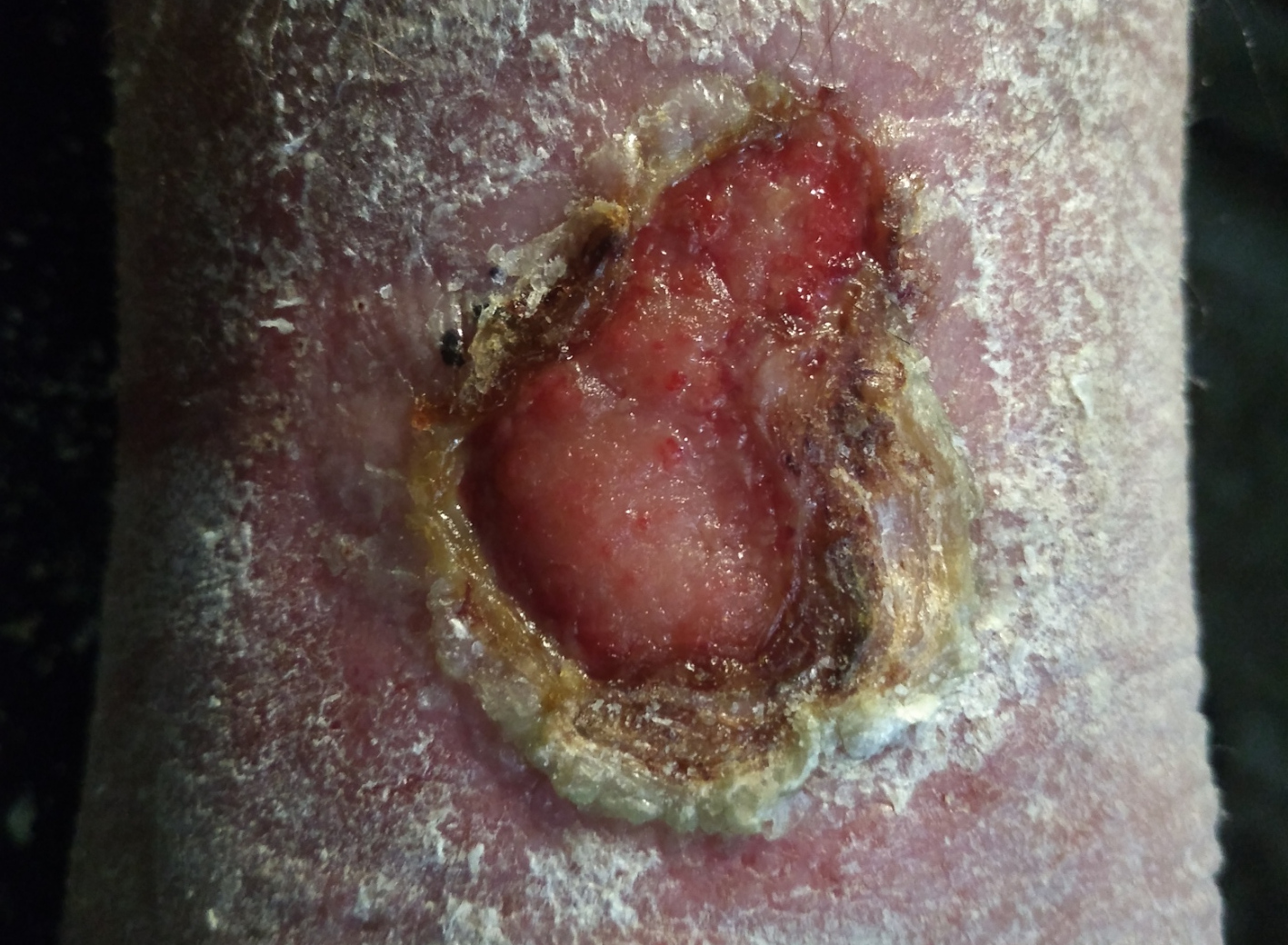
Part of what was also required was an infusion of resources. For my wound, more frequent dressing changes. For Ukraine, more equipment, including heavy armour. Unfortunately, the combined-arms approach that ordinarily would work against the Russian fortifications didn't make significant progress because fighter jets were missing from that combination of arms. On my wound I did face something like a fortification, in the form of overgranulation. It's visible as a raised area at the bottom of the image shown above, which happened because skin hadn't been covering it for a while (like Russians having an opportunity to fortify because they hadn't been kicked out). Skin wouldn't grow over that, so I had to get rid of it. I tried to burn it away with silver nitrate, then with hyrogen peroxide. But when the chemical burns didn't work, I was going to have to go in and just scrape it off. Sure, why not? My last self-surgery went fine. 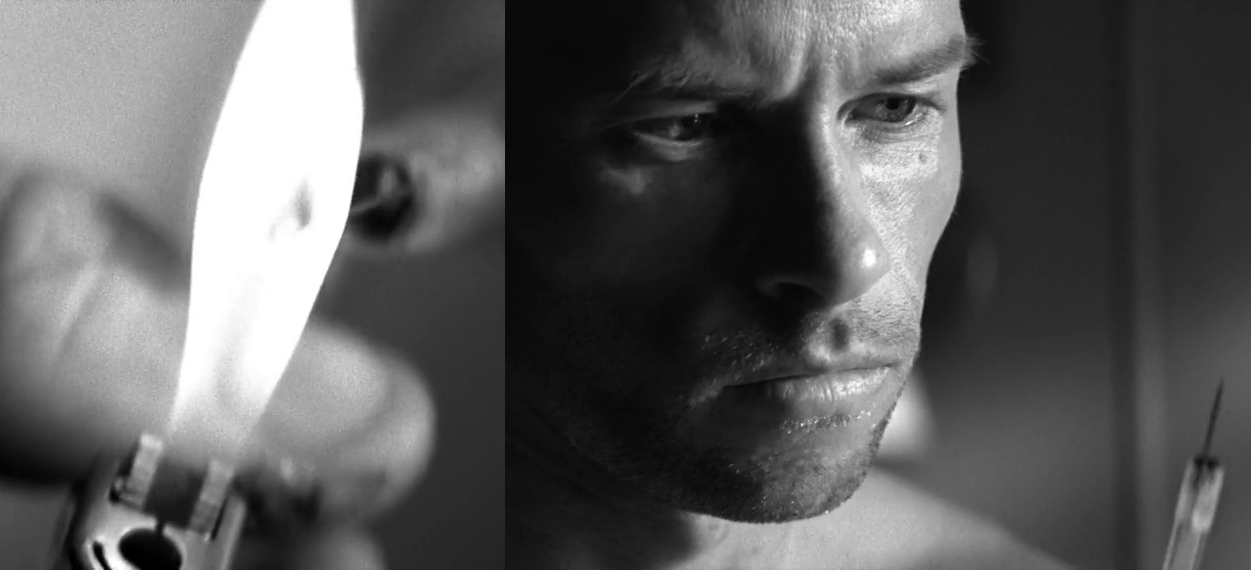
(Memento) 4. Scar Tissue Scar tissue that I wish you saw Sarcastic mister know-it-all . . . With the birds I'll share this lonely view - Red Hot Chili Peppers, "Scar Tissue" (Californication) Super Creep: Scar And I managed to do that without hitting anything important. Scar tissue grew over the wound. 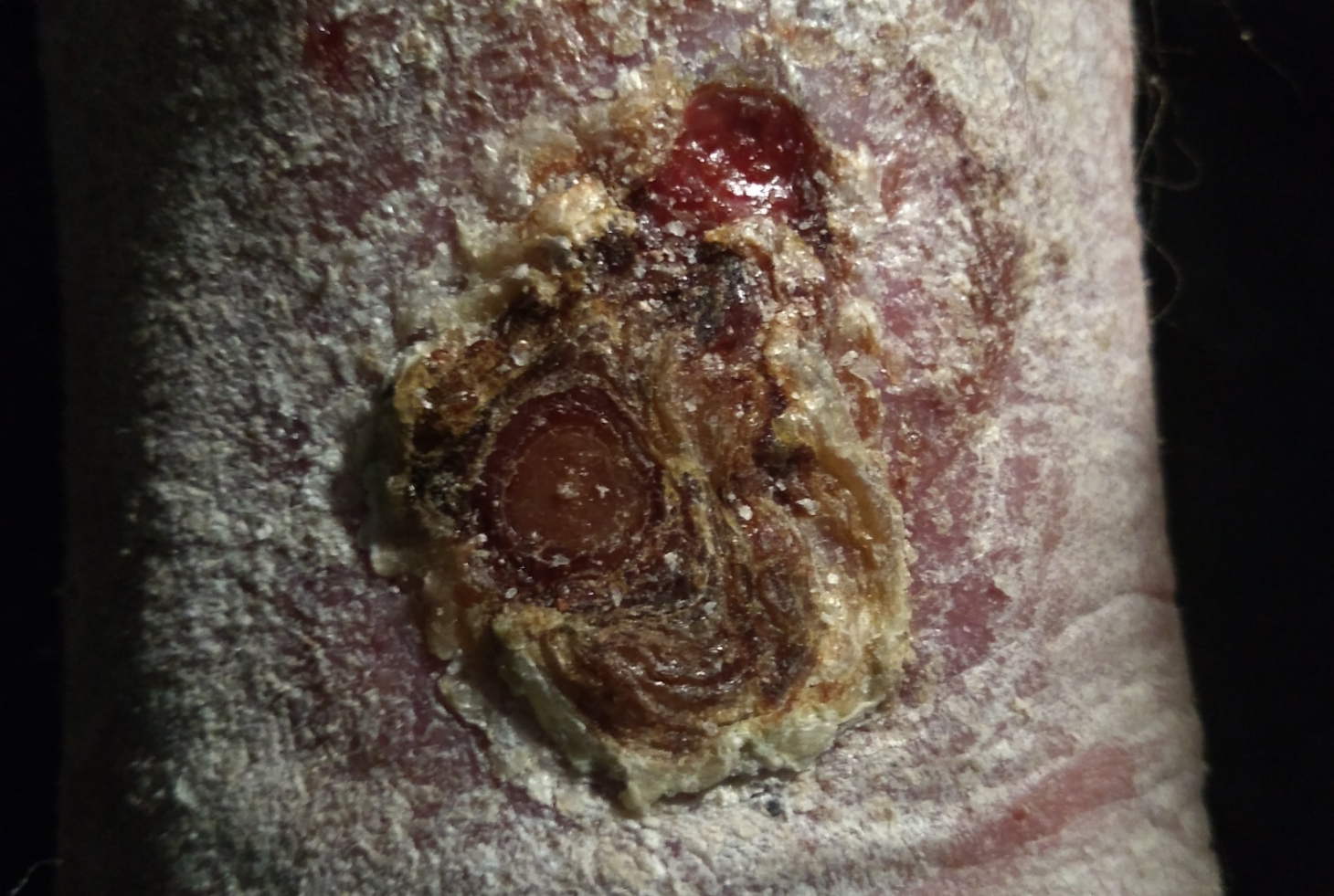
5. I'm Not a Hero - Hans Zimmer & James Newton Howard, "I'm Not a Hero" (The Dark Knight soundtrack) Super Scary Creepy Monster So the process of fixing my leg has been painful, but now it's not bad. Not bad at all. 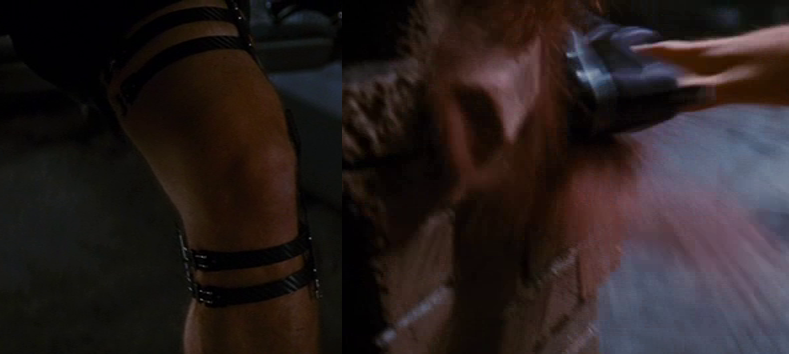
BRUCE WAYNE: AUGHH! ALFRED: Is it really painful? . . . WAYNE: Not bad. Not bad at all. ALFRED: If you're seriously considering going back out there . . . (The Dark Knight Rises) The purpose of the comparison with the components of intelligence is to help justify my characterisation of the problem as hard. It took a lot of thinking, and I actually regard it as one of the most difficult problems I've been confronted by. My "counteroffensive" was more successful than Ukraine's, and I swung around to work on a more difficult problem. Could AI end the possibility of human heroism? Maybe, but it might as well be a human who slays this monster, one that I've faced before. 
Illustrations: an attempt at something like the cover art for Scary Monsters (And Super Creeps) (this took a while, Selene wasn't very cooperative during the shoot); Nexus and K3wp ('message to me, about our mission and connection'); xkcd: "Biology vs Robotics"; my wound in July; stills from Memento; my scar in September; stills from The Dark Knight Rises; an arch vile from Doom II (no, this is not random — I've used this image before, just not on this site). Earlier (2022: How Does the Grass Grow?) |